The Story of Motown Records: How Hitsville U.S.A. Put Detroit on the World Map
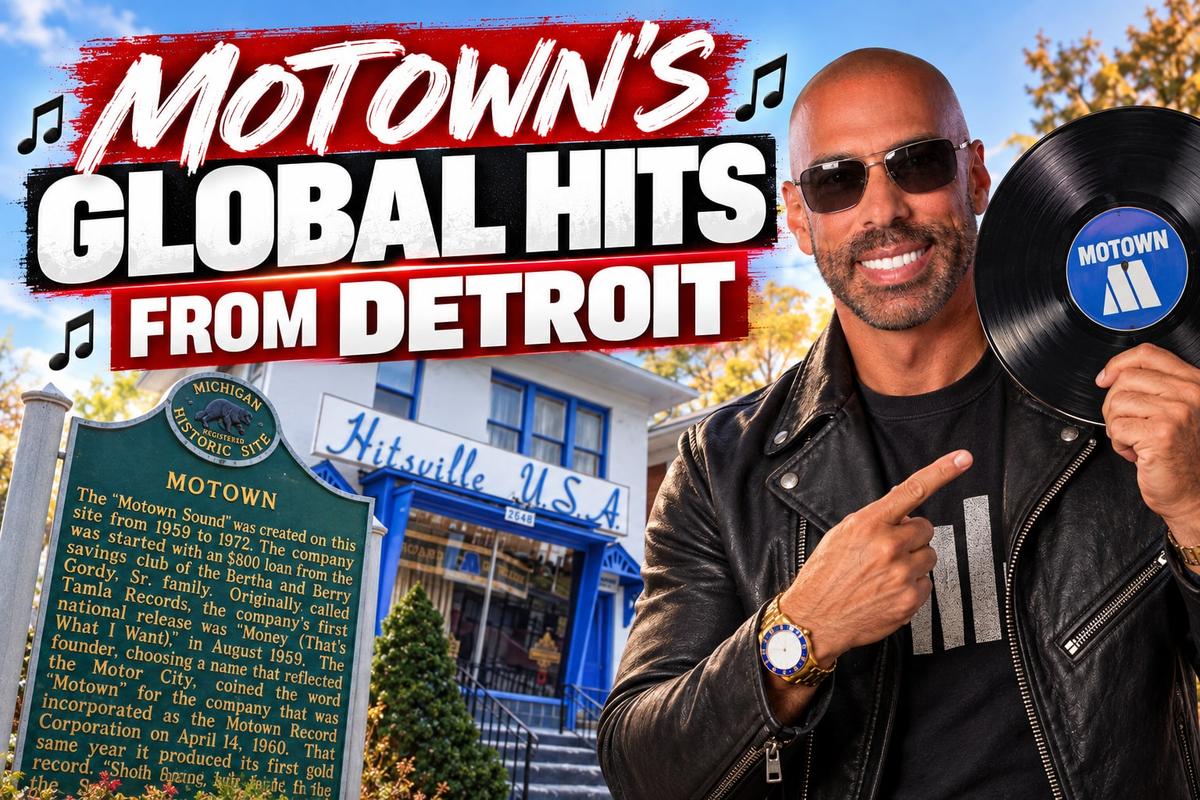
In 1959, Berry Gordy Jr. borrowed $800 from his family and bought a two-story house at 2648 West Grand Boulevard in Detroit. He nailed a sign on the front that read "Hitsville U.S.A." Within a decade, that house had produced more than a hundred Top 10 hits and built one of the most successful independent record labels in American history.
That is the origin of Motown Records, and it is one of the most remarkable business and cultural stories this city has ever produced. If you want to understand why people around the world know Detroit's name, the Motown Museum Detroit history is a good place to start.
One House, One Microphone, One Idea
Gordy was a former boxer and assembly line worker at Ford when he started writing songs in the late 1950s. He had a few modest hits early on, but he saw something the major labels in New York and Los Angeles were missing. He believed Detroit had the raw talent to produce a sound that could reach everyone, not just one slice of the audience.
The first floor of the West Grand Boulevard house became a recording studio. Gordy called it Studio A. The bathroom doubled as an echo chamber. The living room became offices. Artists like Smokey Robinson, Diana Ross, Stevie Wonder, the Temptations, Marvin Gaye, and the Four Tops recorded inside those rooms, often while other artists waited in the hallway.
The "Motown Sound" that came out of that studio was something specific: tight rhythm sections, string arrangements, call-and-response vocals, and melodies that crossed every line radio programmers had drawn. It worked. Between 1961 and 1971, Motown released hit after hit on the Billboard pop charts, not just the R&B charts.
More Than Music
What Gordy built at Motown was a full operation. He ran artist development like a finishing school. Artists learned how to carry themselves in interviews, how to move on stage, how to dress for television appearances. He understood that breaking through meant being undeniable on every level.
That approach produced results that went far beyond album sales. When the Civil Rights Movement was reshaping American life in the 1960s, Motown's artists were on television sets in living rooms across the country, in homes where their presence would have been unthinkable a generation earlier. The music moved through barriers that other forces could not.
Gordy eventually moved the label's headquarters to Los Angeles in 1972. Detroit felt the loss. But the house on West Grand Boulevard stayed, and the story stayed with it.
The Motown Museum and What's Coming Next
The house at 2648 West Grand Boulevard is now the Motown Museum, one of Detroit's most visited cultural landmarks. Visitors walk through Studio A, see the original microphone, and stand in the same rooms where those recordings were made. It is the kind of place that quiets people down in a way few museums can.
The museum's mission is clear: to preserve, promote, and celebrate the authentic Motown story as a platform for others to flourish as thinkers, creators, and entrepreneurs. The vision behind it is that every generation should come to know and be inspired by Motown's cultural and social impact.
The expansion taking shape now adds a new facility called Hitsville NEXT. It serves as the educational center of the expanded campus, focused on talent development, entrepreneurial training, music production, and professional development for people working toward careers in the music industry. It is not a museum addition. It is an active, working hub designed to carry Motown's spirit into the next generation of creators.
For Detroit, that expansion means more visitors, more national attention, and a renewed connection to a story the city sometimes takes for granted.
Why It Still Matters to Metro Detroit
People ask sometimes why local history matters when you are thinking about where to live or invest. Here is a practical answer: cities with strong cultural identities hold their appeal across economic cycles. Detroit's story is long and complicated, but Motown is one thread in it that nobody disputes. Berry Gordy started with $800 and a house on a boulevard that you can drive down today.
If you are exploring communities around Detroit, places like Novi sit within easy reach of the city's cultural anchors, including the Motown Museum. The broader Metro Detroit region carries the weight of that history, and it shows in the pride residents bring to the area.
The Motown Museum Detroit history is not a relic. With Hitsville NEXT under development and visitors coming from across the country and abroad, it is an active piece of what Detroit is building now.
For more on what makes Metro Detroit worth knowing, visit the Z Real Estate Experts blog.
Frequently Asked Questions
Where is the Motown Museum located?
The Motown Museum is at 2648 W. Grand Blvd. in Detroit, Michigan 48208. The address sits on what is now officially named Berry Gordy Jr. Boulevard, in honor of Motown's founder.
What is Hitsville NEXT and how is it different from the original museum?
Hitsville NEXT is the educational center of the Motown Museum's newly expanded campus. Unlike the original museum, which preserves the history of Motown Records, Hitsville NEXT focuses on active programming, including talent development, entrepreneurial training, and music production for people pursuing careers in the music industry.
How did Motown Records get its name?
Berry Gordy named the label Motown as a nod to Detroit's identity as Motor City. The nickname "Motown" had long been used informally for Detroit, and Gordy made it official by attaching it to the label he founded in 1959.
Sources
Related reading
• Detroit's Castle on Grand River: The Story of the Eighth Precinct Police Station
• The Story Behind Troy: How It Became What It Is Today
• The Whitney Detroit History: The Gilded Age Mansion That Still Holds Its Secrets
Homes for Sale in These Areas
Stay Updated
Get market insights, tips, and news from the MARK Z team.