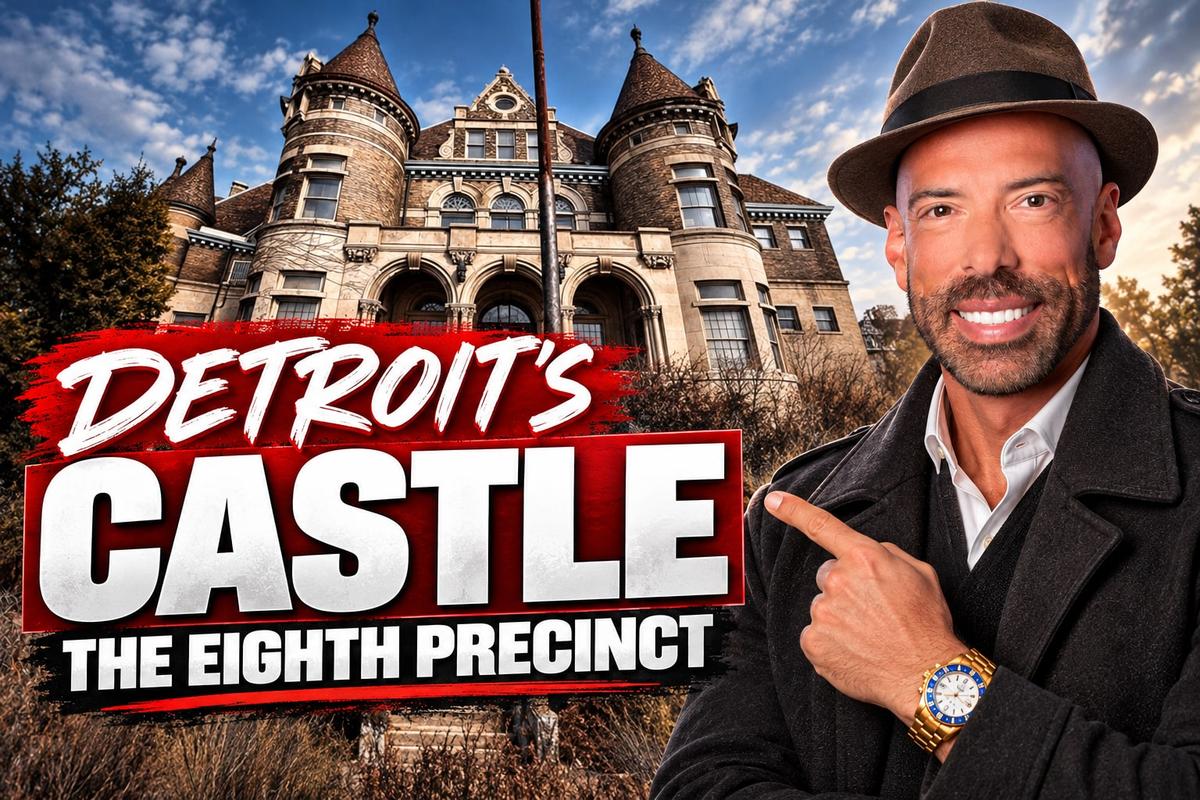
Detroit's Castle on Grand River: The Story of the Eighth Precinct Police Station
Sometime around the turn of the twentieth century, Detroit decided its police stations should look like fortresses. Not metaphorically. Literally stone towers, crenellated parapets, arched entryways — the kind of architecture you'd expect to find in a European city, not on a commercial corridor in the American Midwest. The Detroit Eighth Precinct Police Station on Grand River Avenue is the most striking survivor of that era, and most Metro Detroit residents have never heard its name.
That building has been sitting there long enough to watch the neighborhood around it change completely. It deserves more than a glance from a passing car.
A City That Built Its Police Stations Like Castles
Detroit's approach to civic architecture in the late 1800s and early 1900s was ambitious in a way that feels almost foreign today. City leaders believed public buildings should project permanence and authority. Firehouses, libraries, schools, and police precincts were all built to impress. The Romanesque Revival style, popularized nationally by architect H.H. Richardson, was a natural fit. It favored heavy masonry, round arches, corner towers, and thick walls that read as powerful and serious from the street.
The Detroit Eighth Precinct Police Station on Grand River Avenue was built in that tradition. The building features the hallmarks that earned it the informal nickname of Detroit's castle: a stone or brick facade, a tower element at the corner, arched windows, and a massing that makes it look like it was designed to hold off an siege rather than process paperwork. For a neighborhood police station, that was the point. These buildings were supposed to signal civic order and municipal seriousness.
The architect responsible for this and several other Detroit precinct buildings of the period worked within a city department that understood repetition as a virtue. Similar precinct designs appeared across Detroit's expanding neighborhoods, each one planted like an anchor as the city grew outward along its spoke-like avenues. Grand River Avenue was one of those spokes, radiating northwest from downtown, and the Eighth Precinct sat along it as both a functional facility and a physical statement.
What the Building Actually Looked Like
The Eighth Precinct is the kind of structure that stops you if you let it. The corner tower pulls your eye first. Then you notice the arched openings at the entry, the weight of the walls, the way the building sits on its lot like it has no intention of going anywhere. There is nothing tentative about the design. Every decision in the facade communicates solidity.
Detroit built police stations this way because the late Victorian and Edwardian city believed architecture carried a message. A flimsy building told the public the institution inside was flimsy. A fortress told them something different. Whether or not that logic holds up to scrutiny, the result is that Detroit ended up with a collection of civic buildings that have outlasted almost everything built around them.
The Grand River corridor has changed dramatically over the decades. Businesses have come and gone. Parcels have been cleared and sometimes rebuilt. The Eighth Precinct building, by virtue of its construction quality alone, remained standing through all of it.
The Building After the Police Left
Like most of Detroit's old precinct buildings, the Eighth Precinct eventually stopped functioning as an active police facility. The Detroit Police Department consolidated and reorganized its precinct structure multiple times across the twentieth century, and older buildings were decommissioned as priorities shifted. When a precinct closes, the city is left with a structurally sound, architecturally significant, and often expensive-to-maintain building that no longer has an obvious use.
Some of Detroit's old precinct buildings were demolished. Others sat vacant for years. A few were converted to new uses. The fate of individual buildings often came down to advocacy, ownership, and market conditions at the moment the city decided to act.
The Eighth Precinct on Grand River represents a category of Detroit landmark that preservationists have fought to protect for decades: the civic building that looks like nothing else on the block, that was overbuilt by modern standards, and that survives primarily because it is too solid to fall down easily. Organizations like Preservation Detroit have documented and advocated for buildings like this one, making the case that Detroit's architectural identity is inseparable from structures that most cities would have cleared away.
Why This Still Matters to Metro Detroit Residents
People who live in Metro Detroit, whether in the city itself or in communities like Novi, tend to have a complicated relationship with Detroit's built environment. The buildings get noticed when they're gone, not when they're standing.
The Detroit Eighth Precinct Police Station castle matters because it's a physical record of how seriously Detroit once took its own civic ambitions. The city that built police stations to look like fortresses was a city that believed it was going to keep growing, keep mattering, keep building things meant to last centuries. That belief shows up in the stonework.
For anyone who drives Grand River Avenue regularly, knowing this history changes what you see. The building isn't just a curiosity. It's a data point about what Detroit was, what it invested in, and what it left behind for the people who came after.
---
Frequently Asked Questions
Where exactly is the Detroit Eighth Precinct Police Station castle located?
The Detroit Eighth Precinct Police Station sits on Grand River Avenue on the city's west side, not far from the downtown core. Grand River is one of Detroit's major diagonal corridors running northwest from the city center, and the building sits along that stretch where older commercial and institutional structures still mark the streetscape.
Is the Detroit Eighth Precinct Police Station castle still standing today?
The building has remained standing as of recent years, though its current use and condition have varied over time as the city has managed its inventory of surplus civic properties. Detroit's preservation community has paid attention to structures like this one, and its heavy masonry construction has helped it survive longer than lighter-built buildings on the same corridor.
What architectural style is the Detroit Eighth Precinct Police Station castle built in?
The building reflects the Romanesque Revival style that was popular for American civic architecture in the late nineteenth and early twentieth centuries. Key features include heavy masonry walls, arched window and door openings, and a corner tower element that gives the building its fortress-like appearance from the street.
Sources
Related reading
• The Story Behind Troy: How It Became What It Is Today
• The Whitney Detroit History: The Gilded Age Mansion That Still Holds Its Secrets
• Gateway to Freedom: Detroit's Powerful Monument to the Underground Railroad
Homes for Sale in These Areas
Stay Updated
Get market insights, tips, and news from the MARK Z team.