Gateway to Freedom: Detroit's Powerful Monument to the Underground Railroad
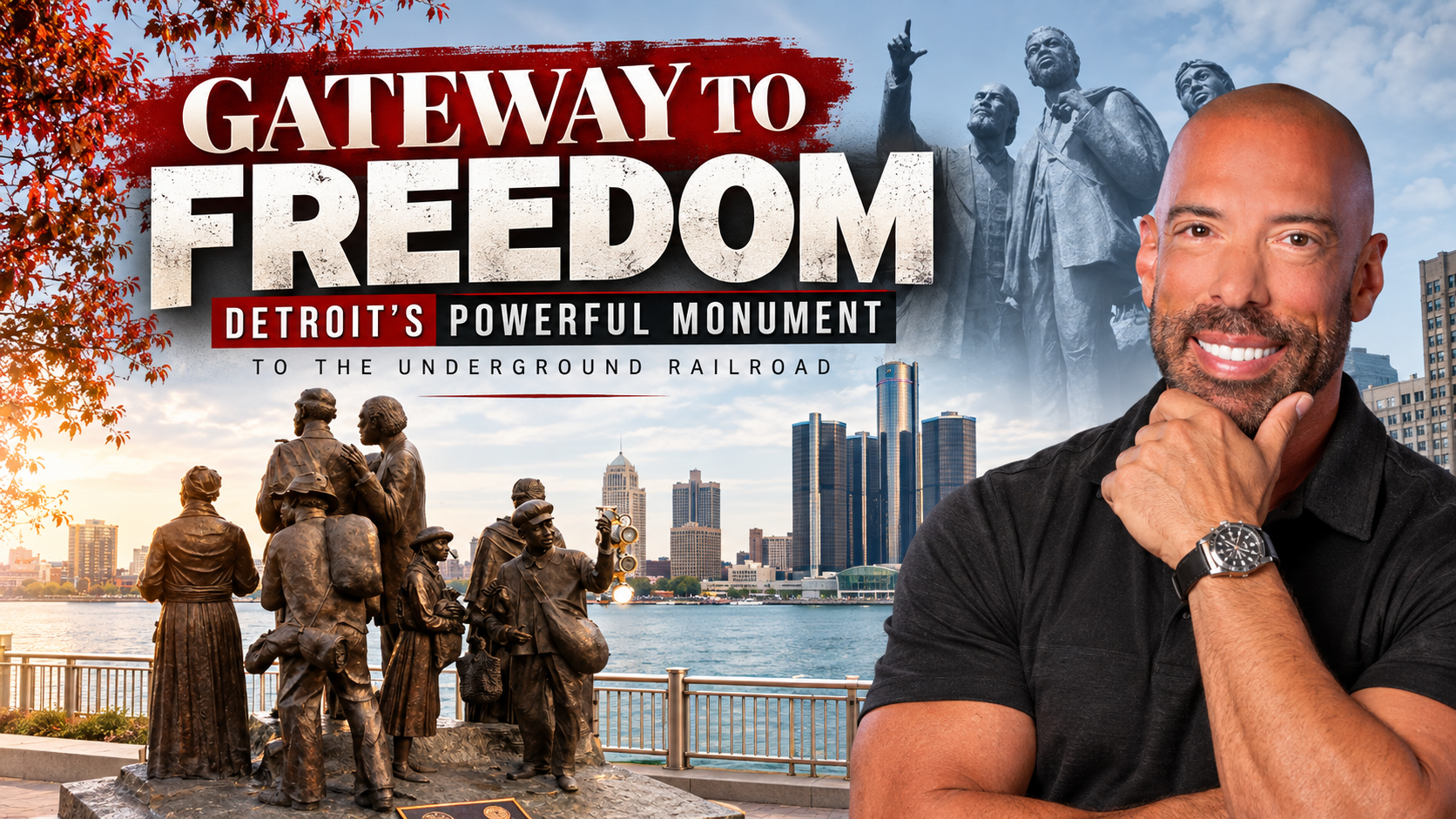
On the Detroit riverfront, a group of eight bronze figures stands facing the water toward Canada. A man points across the river. Others press forward. One woman clutches a child. They look like people who have already survived the impossible and are now within reach of something they were told they could never have: freedom.
This is the Gateway to Freedom, the Detroit Underground Railroad monument that marks one of the most significant sites in the entire history of the American freedom movement. It was unveiled in 2001, created by sculptor Ed Dwight, and it stands on Hart Plaza at the edge of the Detroit River. Less than a mile of water separated enslaved people from Canada, where British law made them free the moment they stepped ashore.
For anyone who calls Metro Detroit home, this monument tells a story that explains a lot about who this city is and why it matters.
Detroit Was the Last Stop
The Underground Railroad was not an actual railroad. It was a network of secret routes, safe houses, and people willing to risk everything to move enslaved people from the South toward freedom. By the mid-1800s, Detroit had become one of the most critical endpoints of that network.
The reason was geography. The Detroit River is narrow. On a clear night, you can see the lights on the Canadian shore. For someone who had traveled hundreds of miles on foot, hidden in wagons, sleeping in barns and church basements, that short stretch of water was the finish line.
Between 1830 and 1860, an estimated 30,000 to 40,000 freedom seekers passed through Detroit on their way to Canada, according to historical records from the Detroit Historical Society. The city was not just a waypoint. It was, for many, the place where the journey ended and a new life began.
The People Who Made It Work
The Underground Railroad in Detroit did not run on the efforts of one group. It worked because of cooperation across racial and cultural lines that was rare for that era.
People of African descent were at the center of the operation, often at the greatest personal risk. The Second Baptist Church, founded in 1836 by freed and escaped enslaved people, became one of the most important stations in the network. Members of Detroit's Black community organized, sheltered freedom seekers, raised money, and at times physically fought off slave catchers who pursued people across state lines.
White abolitionists contributed as well, providing homes, funding, and political cover. The Finney family, who ran a downtown hotel, sheltered freedom seekers in their barn. Quaker families throughout the region were active participants.
North American Indians also played a documented role, providing knowledge of the land and safe passage through territory that white authorities rarely monitored. The cooperation among these groups was not incidental. It was essential. The operation worked because people who had every reason to distrust each other chose a shared cause over division.
The Gateway to Freedom monument reflects this history. Across the river in Windsor, Ontario, a companion monument called Tower of Freedom shows freedom seekers arriving on Canadian soil. The two sculptures face each other across the water, completing the story.
Why This Monument Belongs in Your Understanding of Metro Detroit
People who move to Novi, or anywhere else in Metro Detroit, often focus on schools, commute times, and housing prices. Those things matter. But the region's history shapes its character in ways that are harder to measure and just as real.
Detroit's role in the Underground Railroad is not a footnote. The networks built here, the communities that formed, and the moral stands taken by ordinary people in this city left a mark that lasted. The Second Baptist Church still stands in Greektown. Hart Plaza, where thousands of Detroiters gather every summer for festivals and events, is also the place where freedom seekers once waited for a boat to carry them across to Canada.
When you walk past the Gateway to Freedom monument, you are standing on ground where some of the most consequential decisions in American history were made, by people most history books ignored for a long time.
That history belongs to everyone who lives here now.
Frequently Asked Questions
Where is the Gateway to Freedom Detroit Underground Railroad monument located?
The monument stands on Hart Plaza in downtown Detroit, along the riverfront near the foot of Woodward Avenue. It faces the Detroit River and looks toward Windsor, Ontario, where a companion monument called Tower of Freedom marks the Canadian side of the crossing.
Who created the Gateway to Freedom monument?
Sculptor Ed Dwight designed and created the monument, which was unveiled in 2001. Dwight is also known as the first African American astronaut candidate. The monument features eight bronze figures representing freedom seekers making their final crossing toward Canada.
Can I visit the Detroit Underground Railroad monument year-round?
Yes, the monument is located on Hart Plaza, which is an outdoor public space accessible throughout the year. There is no admission fee to view the monument. The Detroit Historical Museum, about one mile north on Woodward Avenue, offers additional exhibits on Detroit's role in the Underground Railroad if you want more context before or after your visit.
Related reading
• The Guardian Building: The Story Behind Detroit's 'Cathedral of Finance'
• Buying a Lake House in Oakland County Michigan: What Metro Detroit Buyers Should Know
• USDA Loans in Michigan: The $0-Down Mortgage Most Metro Detroit Buyers Don't Know About
Homes for Sale in These Areas
Stay Updated
Get market insights, tips, and news from the MARK Z team.