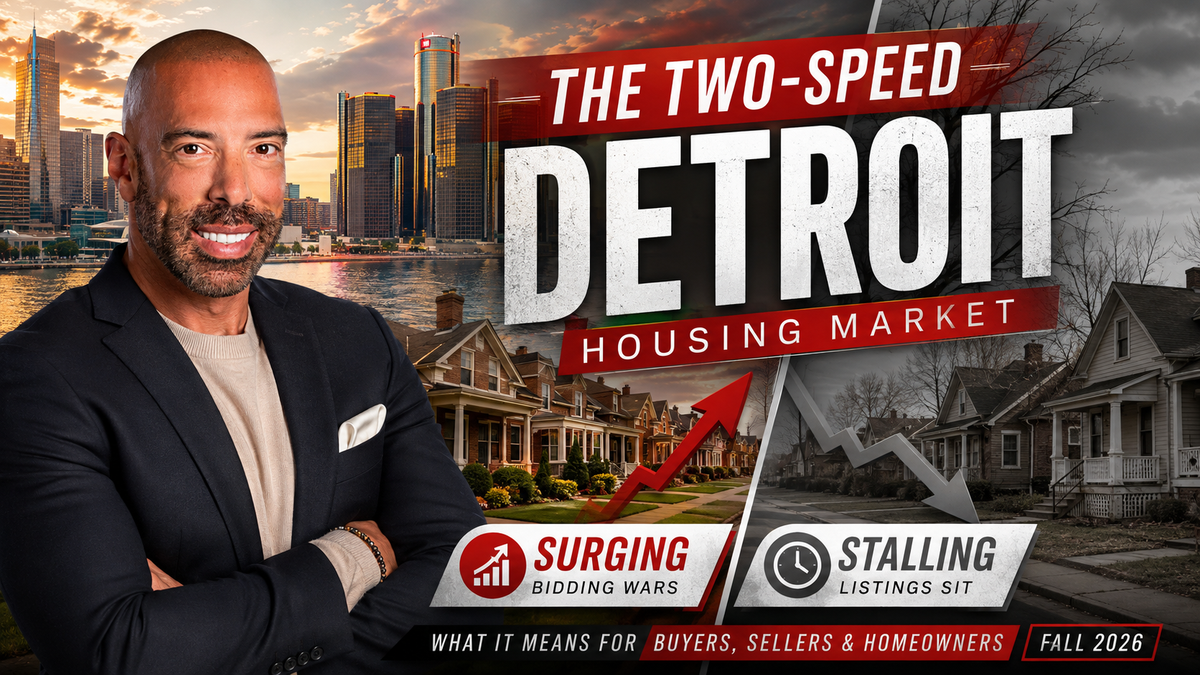
The Two-Speed Metro Detroit Market: Why Some Neighborhoods Are Surging While Others Stall
Metro Detroit's housing market is running at two different speeds right now, and the difference between them has real consequences depending on where you own or where you're looking to buy.
First-quarter 2026 numbers for Metro Detroit show a median sales price around $265,000, up about 4% from a year ago. At the same time, closed sales dropped 7% and available inventory rose 13%. More homes sitting. Fewer closings. Prices still climbing. That combination only makes sense once you stop treating Metro Detroit as one market and start looking at it as twenty-plus smaller ones.
The Two-Speed Metro Detroit Market: What's Actually Driving the Split
The dividing line runs mostly along price point and location. Homes priced below $350,000 in well-connected suburbs are seeing strong demand, short days on market, and in some cases competing offers. Homes priced above that threshold, or sitting in communities with softer job access or older housing stock, are taking longer to move.
Livonia is a good example of a warm market right now. Inventory there is reasonable, prices are stable, and buyer activity picked up meaningfully this spring. Novi continues to attract buyers who want proximity to I-96 and M-5 with newer construction options still in the mix. Both communities fall into the part of the market where demand is outpacing supply in certain price ranges.
The stalling side of the market tends to involve homes that need work, are priced based on a seller's 2022 expectations, or sit in price ranges where buyers have more options than they did two years ago. Those listings are sitting longer, and some sellers are having to cut prices to get traction.
What This Means Depending on Your Situation
• **If you're a seller in a warm community and the right price range**, this market is still working in your favor. Pricing accurately matters more than ever, though. Overpriced homes are not getting bailed out by low inventory anymore. Find out what your home is worth →
• **If you're a buyer**, the experience varies sharply by zip code. Budget extra time and offer flexibility if you're targeting high-demand areas under $350,000. In slower segments, you have more room to negotiate.
• **If you're an investor**, the inventory increase is worth watching. More days on market in certain areas means more opportunity to negotiate, but also means you need to underwrite carefully on resale.
• **If you're a homeowner not planning to move**, your equity position depends heavily on your specific neighborhood, not the regional average. Check what comparable homes are actually closing for, not just what they're listed at. Find out what your home is worth →
The broader Metro Detroit market is not collapsing, and it's not booming across the board. It's splitting. The buyers and sellers who understand that going in will set better expectations, make smarter offers, and price listings correctly. For more local data by community, browse the Z Real Estate Experts blog for neighborhood-specific updates.
Frequently Asked Questions
Why are Metro Detroit home prices still rising if fewer homes are selling?
Prices are driven by the homes that do sell, not the ones sitting on the market. In high-demand communities and price ranges, competition among buyers is still pushing sale prices up. The homes sitting longer tend to be overpriced or in softer segments, and they pull down volume numbers without pulling down median prices much.
Which Metro Detroit communities are seeing the strongest buyer demand in 2026?
Communities like Livonia and Novi have shown consistent demand and stable pricing through early 2026. Areas with good highway access, lower price points relative to the region, and solid school ratings tend to hold buyer interest better when the broader market softens. Your experience will vary based on the specific price range you're targeting within any given community.
Should I wait to list my home if the market is slowing down?
That depends on where your home is and what it's priced at. Sellers in warm communities and competitive price ranges are still getting strong results. Sellers in slower segments may need to adjust expectations on price and timing. Waiting rarely improves your position if your neighborhood is already seeing softer demand.
Stay Updated
Get market insights, tips, and news from the MARK Z team.