The Renaissance Center Redevelopment in Detroit: What the $2.2 Billion Plan Means for the City and Metro Detroit
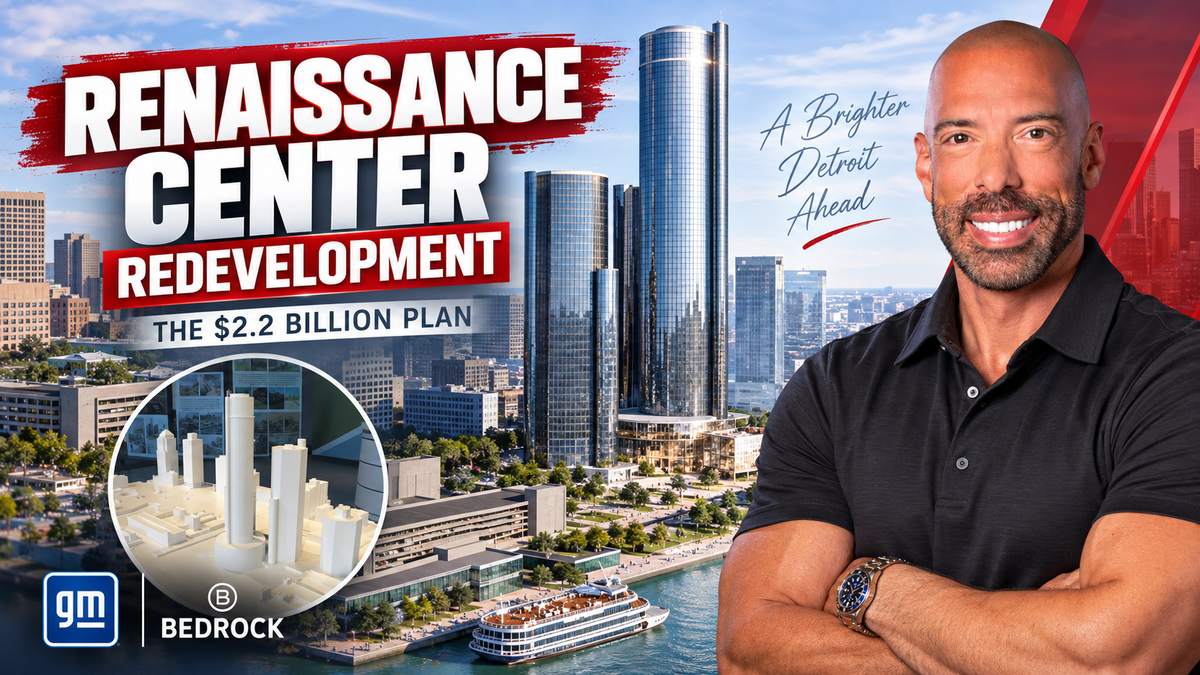
The Renaissance Center redevelopment in Detroit is the biggest real estate story the region has seen in years. GM and Bedrock are proposing a $2.2 billion overhaul of the iconic riverfront complex that would partially demolish the structure, create nearly 1,000 residential units, and transform Detroit's waterfront in ways the city hasn't seen since the RenCen itself was built in the 1970s.
This project is still in the proposal stage, but the scale of it makes it worth understanding now, whether you own property in metro Detroit, are thinking about buying, or simply have a stake in where this region is headed.
What the Renaissance Center Redevelopment Plan Actually Proposes
Under the plan led by Bedrock and General Motors, Towers 300 and 400 would be demolished to open up public space along the riverfront. The central tower would be converted into a hotel with 858 rooms and residential units. Tower 100 would be converted to 384 residential units. In total, the project would create 934 residential units, with 21% designated as affordable housing.
GM also owns 35 acres east of Beaubien Street, and the plan calls for a mixed-use entertainment district on that land. That's a significant footprint of development for a stretch of the riverfront that has sat largely underused.
David Howell, Senior Vice President of Real Estate for the Detroit Economic Growth Corporation, told FOX 2 in September 2026 that the project would put Detroit's waterfront on par with those in Washington D.C., Baltimore, and San Francisco. That's a bold claim, but the scope of the plan gives it some grounding.
Renaissance Center Redevelopment Detroit: What the Public Is Being Asked to Contribute
This is where residents and taxpayers need to pay close attention. A project this size doesn't get built without public support, and the developers are expected to request significant tax incentives and public funding contributions as part of getting this across the finish line. The specific structures of those requests were still being worked through as of the time of this writing, but the scale of what's proposed means the public conversation about subsidies will matter.
Metro Detroit has seen this dynamic before. Big projects that reshape a city's core tend to carry long-term benefits for surrounding property values and regional economic activity, but those benefits take time, and the cost of public incentives falls on taxpayers in the near term. It's worth watching closely.
For context, Detroit's downtown has already seen meaningful momentum. The Hudson's Detroit tower now stands at approximately 685 feet, making it the second-tallest building in the state. The RenCen project would add to that wave of investment along the riverfront corridor.
If you own property in or around Detroit and are thinking about what your asset is worth in light of this development activity, that's a reasonable thing to be tracking. Find out what your home is worth →
What This Means For You
• Investors watching Detroit's downtown and Midtown corridors should note that a project of this scale, if it closes and gets built, typically drives upward pressure on nearby property values over a 5 to 10 year horizon.
• Buyers considering Detroit or inner-ring suburbs should understand that major riverfront development tends to attract retail, hospitality, and additional residential investment, which can change the calculus on neighborhoods that are currently priced lower.
• Homeowners across metro Detroit, from Novi to the Grosse Pointes, have a stake in Detroit's economic health. A stronger downtown core supports the broader regional economy that affects property demand everywhere.
• The affordable housing component, 21% of 934 units, is worth tracking. Whether that commitment holds through permitting and construction is a detail to watch as the project moves through approvals.
The RenCen has defined Detroit's skyline for five decades. What happens to it next will define the city's next chapter. Keep an eye on the public funding discussions in particular. That's where the real policy debate will happen.
For more context on Metro Detroit communities and how development trends ripple across the region, browse the Z Real Estate Experts blog.
Frequently Asked Questions
What is the Renaissance Center redevelopment in Detroit?
The Renaissance Center redevelopment is a $2.2 billion proposal by Bedrock and General Motors to partially demolish the RenCen complex, convert remaining towers into hotel and residential units, and create a mixed-use entertainment district on 35 acres east of Beaubien Street. The plan would create 934 residential units and open new public space along the Detroit riverfront.
Will taxpayers fund the Renaissance Center redevelopment in Detroit?
Developers are expected to request significant tax incentives and public funding as part of the financing plan. The specific structures of those requests were still being finalized as of September 2026. Detroit residents and Michigan taxpayers should follow the public approval process closely, as the subsidy terms will determine how much public money is committed to the project.
How will the Renaissance Center redevelopment affect Detroit property values?
Large-scale riverfront development projects historically put upward pressure on nearby property values over a multi-year period by attracting additional investment, retail, and population growth to the surrounding area. The full impact on Detroit and metro Detroit property values will depend on how much of the plan actually gets built and on what timeline. Find out what your home is worth →
Related reading
• Troy Approves New Condo Project Near Long Lake & John R — What to Know
Homes for Sale in These Areas
Stay Updated
Get market insights, tips, and news from the MARK Z team.