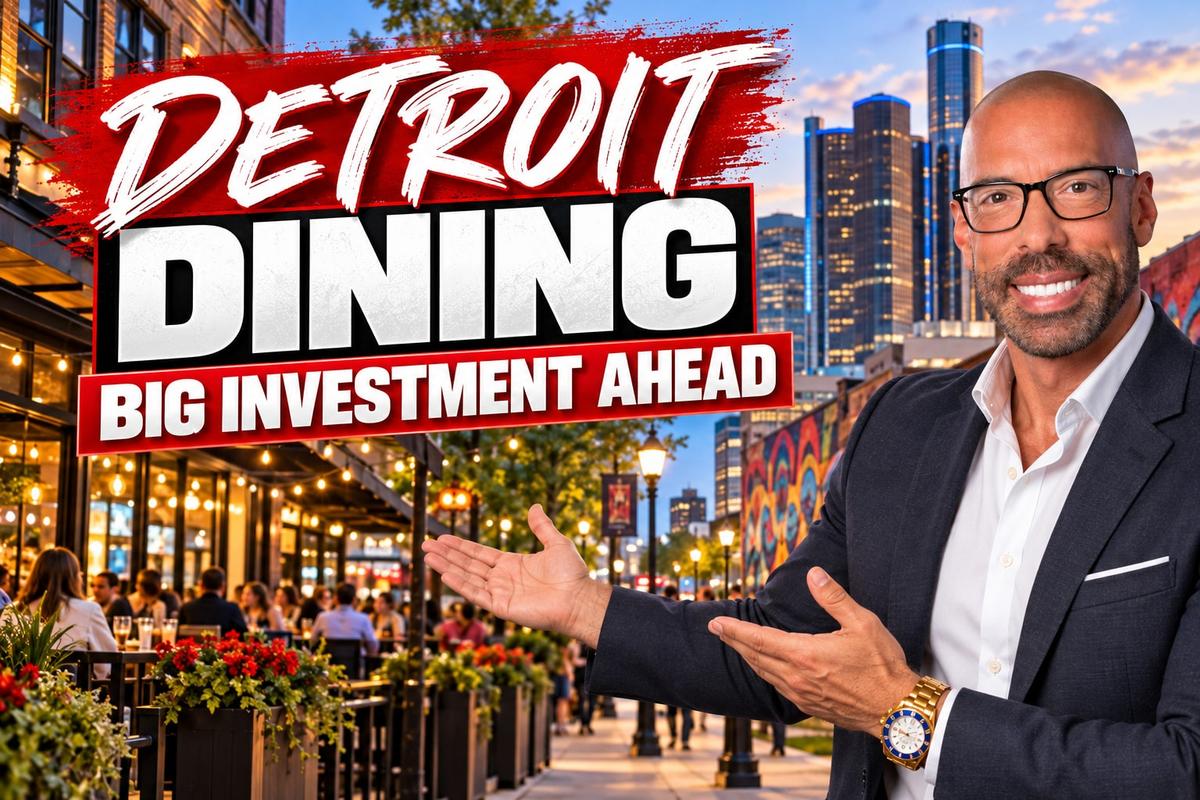
National Restaurant Groups Are Betting on Detroit: What New Dining Investment Signals About the City's Growth
When serious restaurant money moves into a city, property values tend to follow. Detroit is drawing exactly that kind of attention right now, and for Metro Detroit homeowners and investors, the Detroit restaurant growth real estate connection is worth paying close attention to.
Why National Brands Are Choosing Detroit Over Bigger Markets
Union Square Hospitality Group, the New York-based company behind Gramercy Tavern and Union Square Café, recently opened Pine Hall in downtown Detroit. The restaurant sits on the 12th floor of the Hudson Detroit building, seats 300 people, and features a 3,300-square-foot wraparound terrace. That is not a soft opening in a secondary market. That is a flagship-level commitment.
Manhattan-based Ray's by Authentic Hospitality is also planting a flag in Detroit, bringing its bar concept to the base of a downtown building. These groups are choosing Detroit over cities with larger populations and more established hospitality scenes. According to Restaurant Business magazine, mid-size markets like Detroit, Nashville, and Kansas City are drawing growing interest from established brands because city leaders have reshaped the physical and economic footprint of downtown in ways that give the industry room to grow.
More investment is reportedly in the pipeline.
What Restaurant Investment Actually Signals for Real Estate
Restaurant groups do not expand on gut feeling. Before signing a lease, they study consumer spending data, daytime and nighttime foot traffic, income trends, and population growth projections. When a group like Union Square Hospitality commits to a 300-seat restaurant in a market, they have already concluded that the local consumer base can support it.
That same analysis is useful to anyone thinking about Detroit restaurant growth real estate in the broader Metro Detroit context. Neighborhoods that attract destination dining tend to see increased foot traffic, which draws retail, which raises the commercial tax base, which funds infrastructure. Residential demand tends to build alongside that cycle. Buyers start looking in areas they are already visiting on weekends. Homeowners in those corridors see appreciation that tracks the neighborhood's commercial momentum. Find out what your home is worth →
For investors watching specific Detroit-adjacent submarkets, the restaurant story is a leading indicator worth tracking alongside traditional metrics like days on market and median sale price.
What This Means For You
• Buyers researching Novi and other Metro Detroit communities should look at which neighborhoods are attracting new commercial tenants, not just which ones have the lowest prices today.
• Homeowners in or near downtown-adjacent corridors are sitting in areas that institutional hospitality groups have already analyzed and bet on. Find out what your home is worth →
• Investors should treat restaurant openings from national groups as a data point, not a trend piece. These brands spend real money on market research before signing leases.
• The Detroit restaurant growth real estate story is still early. More concepts are expected to open downtown, which means the ripple effects on residential demand are still unfolding.
Detroit's commercial momentum is measurable and it is attracting real capital from groups that know how to read a market. For anyone making a real estate decision in Metro Detroit, that is worth factoring in.
Frequently Asked Questions
Does new restaurant investment actually affect home values in Metro Detroit?
Commercial investment, including restaurants, tends to increase foot traffic and attract additional retail, which strengthens the local tax base and raises residential demand over time. It is not a guarantee of appreciation, but analysts and appraisers do track commercial activity as part of neighborhood trend analysis.
Why are national restaurant brands choosing Detroit over larger cities right now?
City leaders have invested in reshaping Detroit's downtown infrastructure and economic footprint, creating conditions that make the market viable for hospitality operators. Groups like Union Square Hospitality Group are also finding that mid-size markets offer lower build-out costs and less competition than markets like New York or Chicago.
How can a Metro Detroit buyer use Detroit restaurant growth real estate trends in their search?
Look at where commercial tenants with strong financial backing are committing to long-term leases. Those decisions reflect market research that most individual buyers do not have access to. Pairing that information with local inventory data and median price trends gives you a fuller picture of where demand is heading.
Sources
• Union Square Hospitality Group
• Restaurant Business Magazine
• Ray's by Authentic Hospitality
Related reading
• Old Redford Treatment Center Opens in West Detroit: What It Means for the Neighborhood
• Belle Isle Ballfield Renovations: What the Upgrades Mean for Detroit and Metro Residents
Homes for Sale in These Areas
Detroit
Novi
Stay Updated
Get market insights, tips, and news from the MARK Z team.