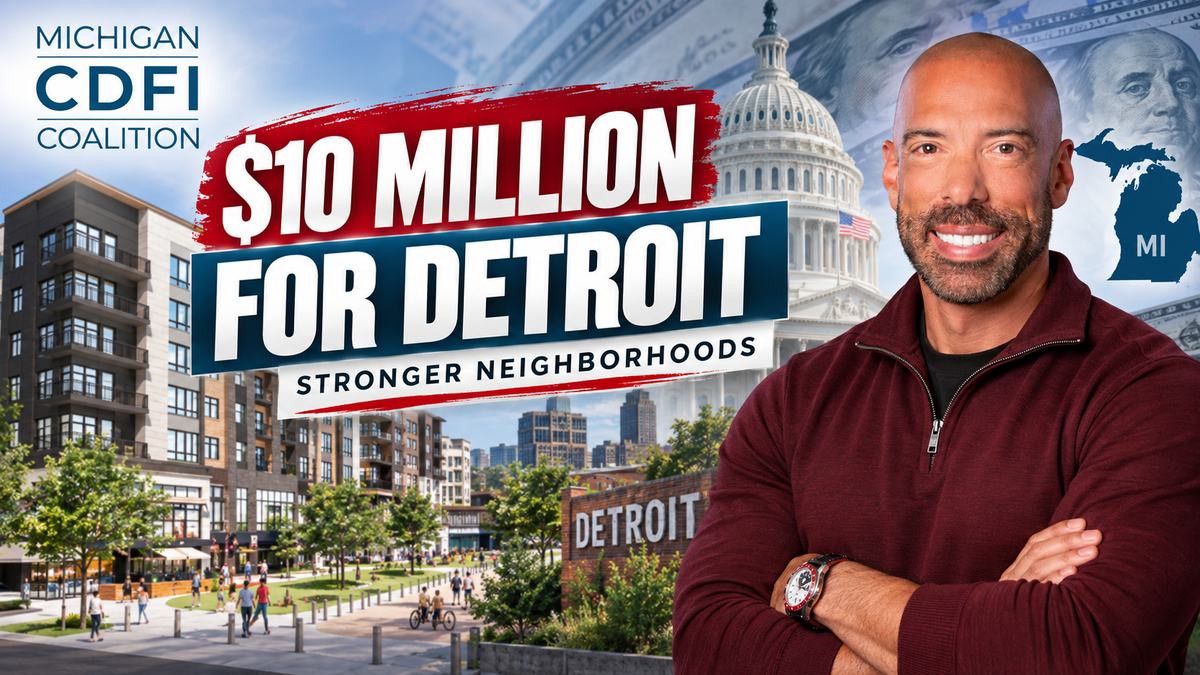
Michigan CDFI Small Business Detroit: What a $10 Million Federal Loan Means for Neighborhoods and Real Estate
The Michigan CDFI Coalition received a $10 million federal loan to increase lending capital for small businesses, affordable housing, and community spaces across Michigan. For Detroit neighborhoods, that money moves through local Community Development Financial Institutions that already work with business owners on the ground.
This matters to Metro Detroit homeowners and investors because small business activity in a neighborhood is one of the clearest signals of where property values are heading.
Michigan CDFI Small Business Detroit: How the Money Flows
CDFIs are not banks in the traditional sense. They are mission-driven lenders, certified by the U.S. Department of the Treasury, that provide financing to borrowers who typically cannot access conventional credit. The Michigan CDFI Coalition coordinates that network across the state.
One example from their network is ProsperUs Detroit, which has worked with Chef Ameneh Marhaba since 2021 through its Entrepreneur Training Program. Chef Marhaba opened Little Liberia in Detroit's East English Village neighborhood in March 2026. It is Michigan's only dedicated Liberian restaurant and sits inside The Ribbon, a mixed-use development that received investment support from the Michigan Economic Development Corporation. That is the chain this loan strengthens: federal capital, CDFI lender, business owner, neighborhood.
Why Small Business Lending Connects to Property Values
When a neighborhood gains a restaurant, a retail shop, or a service business, two things happen. Jobs are created locally, and foot traffic increases on commercial corridors. Both of those reduce vacancy pressure on nearby residential blocks and give residents more reason to stay and invest in their properties.
This is not theory. Neighborhoods with active small business corridors tend to hold residential values better during market slowdowns than comparable areas without them. Investors who track Michigan CDFI small business Detroit activity are essentially watching an early indicator of neighborhood stabilization.
If you own property in Detroit or in surrounding communities like Novi and want to understand how regional capital flows affect your equity position, it is worth paying attention to where CDFI lending concentrates. Find out what your home is worth →
What This Means For You
• Small business lending in Detroit neighborhoods supports the commercial activity that stabilizes nearby residential property values.
• The $10 million loan expands the pool of capital available to business owners who could not qualify for conventional bank financing.
• Mixed-use developments like The Ribbon, where Little Liberia operates, combine retail and community space in ways that can anchor blocks for years.
• Investors tracking Detroit acquisition opportunities should watch which corridors are receiving CDFI-backed business support. That often signals where city and state resources are also concentrating.
For more context on Metro Detroit communities and market conditions, browse the Z Real Estate Experts blog for local analysis.
The $10 million figure is significant, but the real story is the infrastructure behind it. Michigan's CDFI network has built relationships with business owners over years. That trust is what turns a loan into an open restaurant, and an open restaurant into a more stable block.
Frequently Asked Questions
What is a CDFI and how does it help small businesses in Detroit?
A Community Development Financial Institution is a lender certified by the U.S. Treasury to serve borrowers in low-income or underserved markets. In Detroit, CDFIs like ProsperUs Detroit provide loans and technical assistance to small business owners who cannot access traditional bank financing.
How does Michigan CDFI small business lending affect Detroit property values?
Small businesses create local employment and draw consistent foot traffic to commercial corridors. Both factors reduce neighborhood vacancy and support residential property values on nearby blocks. Investors often treat active small business lending as an early signal of neighborhood stabilization.
Can Metro Detroit homeowners or investors benefit from CDFI programs directly?
CDFIs primarily serve small business owners and affordable housing developers, but the Michigan CDFI Coalition's network also supports community spaces and mixed-use projects. Homeowners with equity in areas where CDFI activity is growing may see that reflected in property demand over time. Find out what your home is worth →
Related reading
• Troy Approves New Condo Project Near Long Lake & John R — What to Know
Homes for Sale in These Areas
Detroit
Novi
Stay Updated
Get market insights, tips, and news from the MARK Z team.