Detroit's Zillow Value vs. Real Sale Prices: Why the Gap Matters for Buyers and Sellers
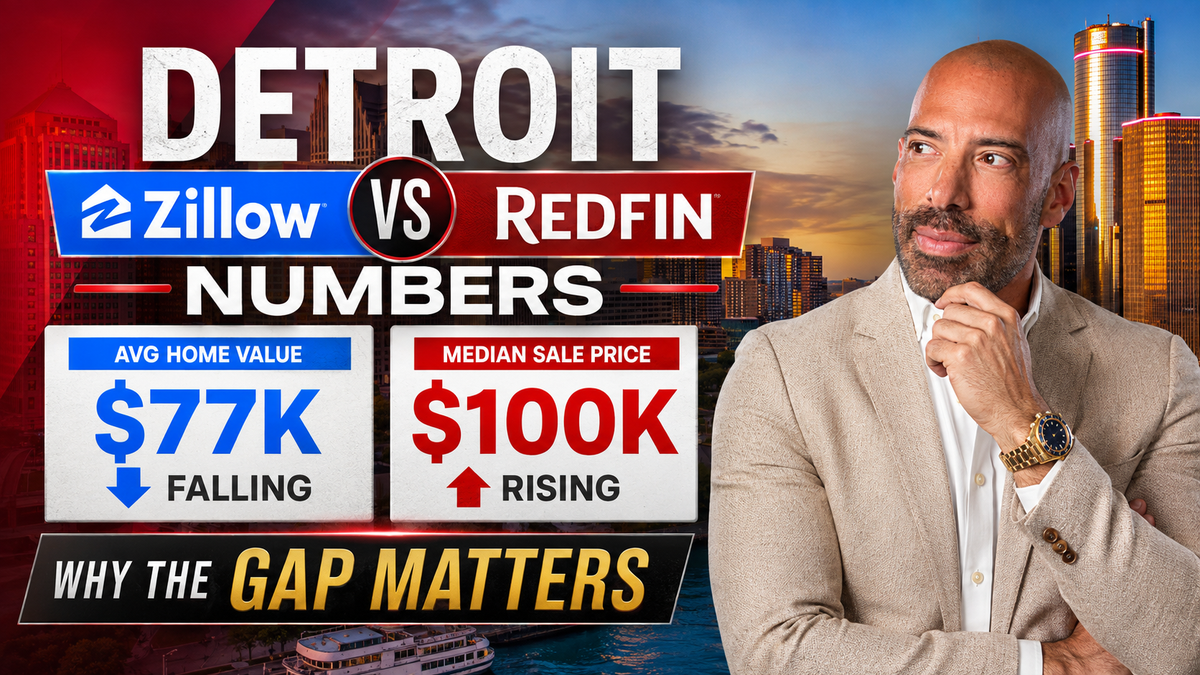
Detroit's median closed sale price sits at $100,000 — up 4.1% year over year — while Zillow's average home value shows $77,245, down 5.1%. These two numbers aren't contradicting each other. They're measuring entirely different things, and conflating them is one of the most common mistakes Detroit buyers and sellers make right now.
Detroit's Zillow Value vs. Real Sale Prices: What Each Number Actually Measures
Zillow's figure is an automated estimate — a Zestimate — that averages all homes in a market, including vacant, distressed, and tax-foreclosed properties that never trade on the open market. In a city like Detroit, where a meaningful share of the housing inventory includes properties in various stages of distress, that pulls the average down significantly.
The Redfin median sale price, by contrast, reflects only homes that actually closed — arm's-length transactions between a buyer and a seller. That $100K figure tells you what real buyers are paying for real homes that actually went to market. Homes are going to pending in around 34 days, which signals consistent demand, not a collapsing market.
For homeowners wondering what their property is actually worth in today's market Find out what your home is worth →, the closed sale data is the number that matters most.
Why This Gap Matters for Metro Detroit Buyers and Sellers
The disconnect between Detroit's Zillow value vs. real sale prices has real consequences. Sellers who anchor on the Zestimate may underprice by tens of thousands of dollars. Buyers who see the $77K headline may arrive at the table with unrealistic expectations, then lose offers because the market is performing well above that figure.
This dynamic plays out across Novi and the broader Metro Detroit region as well. Corporate relocation buyers — a significant part of our market given Michigan's auto and tech sector presence — often arrive having done online research. When headline numbers don't match what they see at open houses, it creates confusion that can stall decisions.
The smartest move in any neighborhood is to look at closed sales data within the past 90 days, in a defined radius, for genuinely comparable homes. That's what agents use. That's what appraisers use. Zestimates are a starting point, not a pricing strategy. Sellers ready to list should get a current comparative market analysis before settling on any number Find out what your home is worth →.
What This Means For You
• **If you're a buyer:** The $77K Zillow figure does not mean you'll find move-in-ready Detroit homes at that price. Expect to compete near or above the $100K median on marketable inventory.
• **If you're a seller:** Your home's value is determined by what buyers have actually paid for similar homes nearby — not an automated algorithm that includes non-market properties.
• **If you're an investor:** The 34-day average days to pending is meaningful. Demand is real. Underwriting to Zillow's figure alone could cause you to misread rental yields and ARV.
• **If you're relocating:** Get a local agent to walk you through neighborhood-level closed data. Detroit is hyper-local — block-by-block conditions vary in ways no national tool captures.
Understanding the difference between automated estimates and actual closed sales is foundational to any smart real estate decision. For a deeper look at how to read market data in Metro Detroit, visit our blog for ongoing local market breakdowns.
Frequently Asked Questions
Why is Zillow's Detroit home value so much lower than what homes are actually selling for?
Zillow's algorithm averages all properties in its dataset, including distressed, vacant, and tax-foreclosed homes that skew the figure downward. The median closed sale price only reflects homes that actually traded on the open market, which gives a much more accurate picture of what buyers are paying.
Should Detroit sellers price their home based on Zillow?
No. Zestimates are a broad automated estimate, not a pricing tool. Detroit sellers should rely on a comparative market analysis using recent closed sales of similar homes in the same neighborhood — ideally within the past 60 to 90 days — to set an accurate and competitive list price.
Is Detroit's real estate market declining if Zillow shows a 5.1% drop?
Not necessarily. The Zillow decline reflects movement in its broader estimated value index, which includes non-market properties. The Redfin closed sale median is up 4.1% year over year, and homes are going to pending in about 34 days — both signals of a market with active, real buyer demand.
Homes for Sale in These Areas
Stay Updated
Get market insights, tips, and news from the MARK Z team.