Detroit Retail Shortage, Neighborhoods, and What It Signals for Buyers and Investors
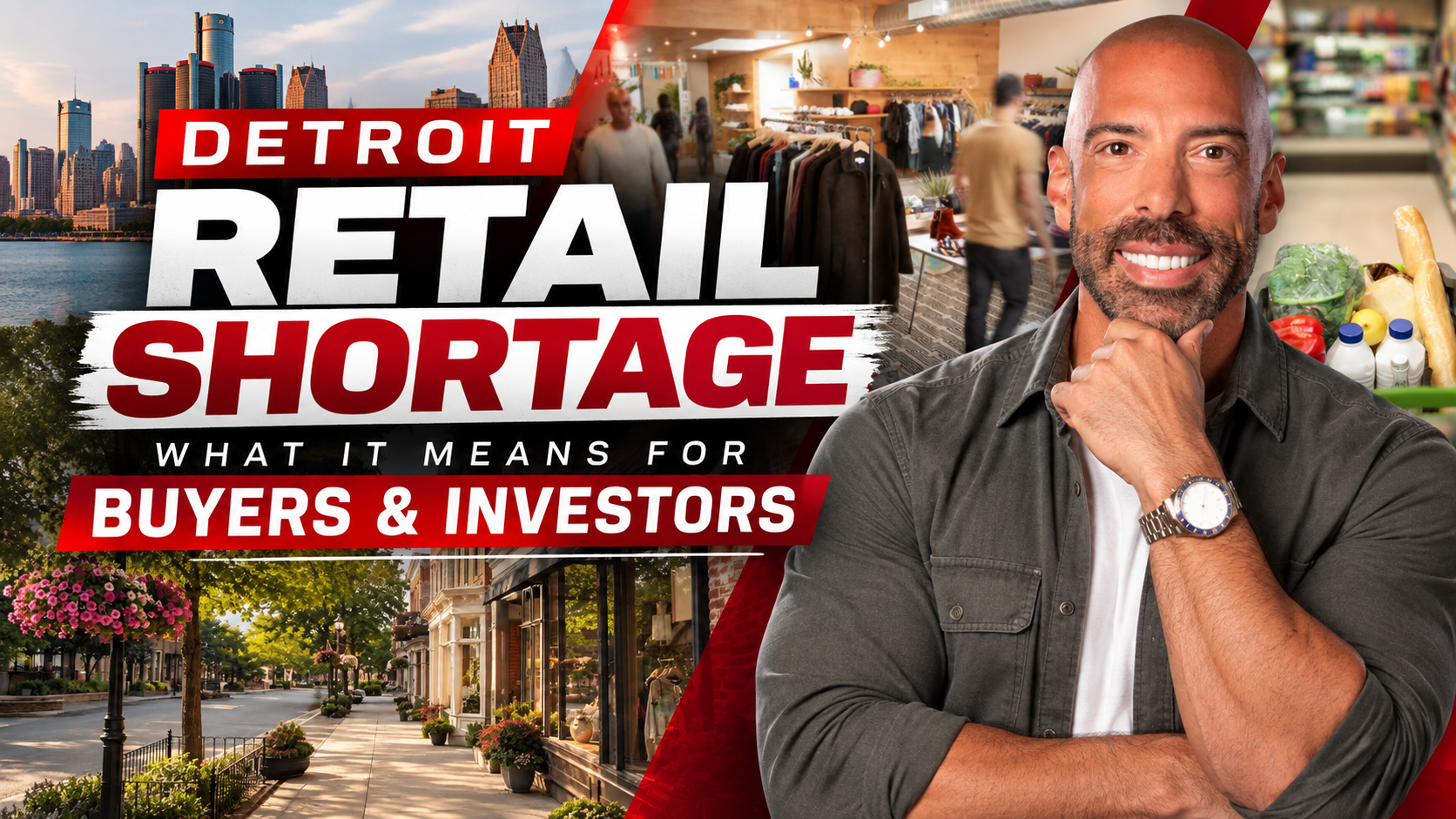
Detroit residents spend an estimated $3 billion every year at suburban stores because enough retail options don't exist closer to home. That dollar figure, cited by Mayor Mary Sheffield at the 2026 Mackinac Policy Conference, captures something buyers and investors in Metro Detroit need to take seriously: the Detroit retail shortage neighborhoods face is both a quality-of-life problem and a signal about where property values may move next.
Why Detroit's Retail Gap Exists
The shortage didn't happen overnight. Detroit's population peaked at nearly 1.85 million residents in 1950. Deindustrialization and social conflict pushed more than 600,000 of those residents out of the city by 1980. Retailers follow rooftops and household income. As both declined, major chains pulled back or never came. What remained was a city with the physical footprint of a large market but the purchasing-power profile of a much smaller one.
Mayor Sheffield said at the Mackinac Policy Conference that poverty is the primary obstacle to landing national brands like Costco and TJ Maxx. Her framing matters: "poverty elimination is a growth strategy." She's already moved 1,143 full-time city workers to a minimum livable wage of $21.45 an hour. That's a policy bet that raising household income will eventually pull retail investment in.
What Retail Access Means for Neighborhood Investment
For anyone evaluating Detroit retail shortage neighborhoods as investment targets, retail location decisions are a useful secondary signal. Retailers research purchasing power, traffic counts, and nearby residential trends before they sign a lease. When a grocery store, pharmacy chain, or national brand opens in a corridor, it usually confirms that someone with serious analytical resources has already concluded that the surrounding neighborhood has income stability or upward momentum.
Suburbs like Novi and Troy have dense retail precisely because household income and population density supported it. Detroit neighborhoods that start attracting similar commercial attention are worth watching closely, because retail reinforces residential demand once it arrives.
What This Means For You
• Detroit buyers should track commercial building permit activity in target neighborhoods. New retail construction or national tenant announcements often precede rising home prices by 12 to 24 months.
• Investors holding property in suburban corridors with strong retail access benefit from that amenity in resale pricing. Find out what your home is worth →
• Sheffield's wage policy and retail attraction initiative are early-stage. Investors taking a long position on Detroit neighborhoods near planned commercial corridors carry more risk than those in established suburban markets, but potentially more upside.
• The $3 billion in annual suburban spending Detroit residents make represents real demand. Retailers that capture even a fraction of it will likely anchor neighborhoods that become more competitive for residential buyers.
Understanding the Detroit retail shortage neighborhoods face gives you a clearer lens for evaluating where property values may shift. Retail follows income, and income follows investment. Tracking where that cycle is starting in Detroit, and comparing it against what suburbs like Novi have already built, is how you find the opportunity before it's obvious.
For more analysis on Metro Detroit neighborhoods and investment trends, visit our blog.
Frequently Asked Questions
Why does Detroit have fewer major retailers than comparable cities?
Detroit lost more than 600,000 residents between 1950 and 1980 as deindustrialization reshaped the regional economy. Retailers base location decisions heavily on household income and population density, and as both dropped in the city, national brands followed their customers to the suburbs rather than staying.
How does the Detroit retail shortage affect home values in city neighborhoods?
Limited retail access reduces quality of life for residents and signals lower purchasing power to prospective buyers, both of which put downward pressure on prices. Conversely, neighborhoods that attract new commercial tenants tend to see increased residential interest, which supports or lifts home values over time.
Which Detroit neighborhoods are most likely to benefit as retail expands?
Neighborhoods near planned or active commercial corridors, areas where building permit activity is increasing, and corridors close to major employment centers are worth monitoring. Mayor Sheffield's 2026 retail attraction initiative is city-wide, but areas with existing infrastructure and stronger income levels are likely to draw tenants first.
Related reading
• Data Centers Are Coming to Rural Areas — Could Metro Detroit's Outskirts Be Next?
• How to Buy Your Next Metro Detroit Home Before Your Current One Sells
Homes for Sale in These Areas
Detroit
Novi
Troy
Stay Updated
Get market insights, tips, and news from the MARK Z team.