Michigan Central Station: From the World's Tallest Rail Station to 30 Years of Abandonment to Ford's $950M Comeback
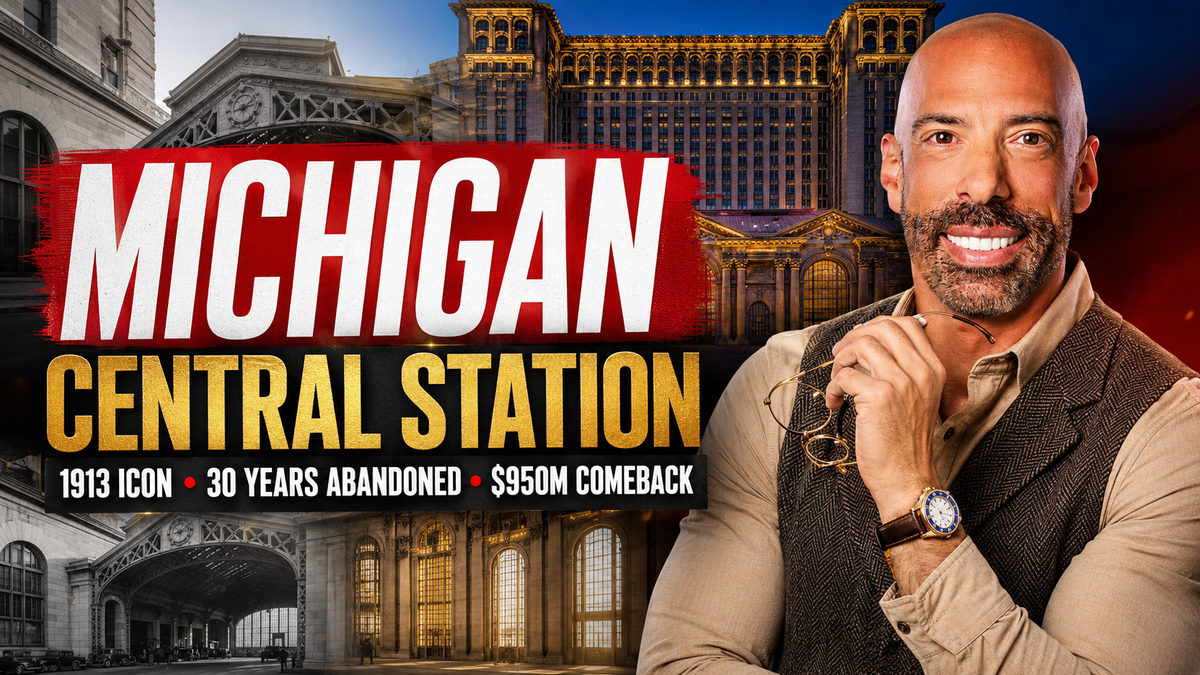
The last Amtrak train pulled out of Michigan Central Station on January 5, 1988. Within a decade, every window in the 18-story office tower had been smashed. Pigeons roosted in the grand waiting room. Scrappers stripped the copper and the marble. And yet the building stood — stubborn, skeletal, impossible to ignore — becoming the single most photographed symbol of Detroit's long decline. For 30 years, it just stood there and dared the city to give up.
It didn't. And neither did the station.
The story of Michigan Central Station — from the world's tallest rail station to 30 years of abandonment to Ford's $950M comeback — is one of the most dramatic arcs in American architectural history. And if you live in Metro Detroit, it's your story too.
A Masterpiece Born from Disaster
Here's something most people don't know: Michigan Central Station wasn't supposed to be where it is.
The original depot stood much closer to downtown, near Third Street. It burned to the ground in 1913. With the city scrambling, the Michigan Central Railroad needed a new station — fast. They chose a site in Detroit's Corktown neighborhood, well west of downtown, and hired the New York firm Reed & Stem along with Warren & Wetmore to design it. That partnership had just completed Grand Central Terminal in New York City. The same architectural minds that gave America Grand Central also gave Detroit Michigan Central Station.
When it opened in December 1913, it was the tallest railroad station in the world — an 18-story Beaux-Arts office tower sitting atop a grand Neoclassical terminal. The waiting room alone was 230 feet long, modeled after the Roman Baths of Caracalla. The station processed hundreds of thousands of travelers during both World Wars. At its peak, more than 4,000 passengers passed through daily.
The Long Abandonment
The decline wasn't sudden. It was a slow leak.
Passenger rail travel dropped through the 1950s and '60s as Americans fell in love with the interstate highway system — ironically, an industry centered right here in Metro Detroit. By 1967, the station's fortunes were clearly tied to a city under enormous strain. Amtrak took over operations in 1971 and limped along for another 17 years before finally cutting service in 1988.
What followed was one of the most stunning examples of urban decay in American history. The city of Detroit purchased the station in 1989, but had no plan and no money. A succession of owners floated proposals — a casino, a federal courthouse, a police headquarters — none of which materialized. All the while, the building was stripped, vandalized, and exposed to decades of Michigan winters. By the 2000s, it had become a destination for urban explorers and photographers worldwide. Its hollowed-out windows became the defining image of a city fighting for its survival.
Ford's $950M Bet on Detroit's Future
In 2018, Ford Motor Company announced it had purchased Michigan Central Station for $90 million. The plan: spend $950 million to restore the station and surrounding properties into a 30-acre innovation campus focused on mobility, electric vehicles, and autonomous transportation. It was the kind of announcement that made people stop scrolling.
The restoration was meticulous. Ford and its partners sourced period-appropriate materials, restored the original terrazzo floors, rebuilt the vaulted ceilings, and brought back the scale and grandeur of the 1913 original — while threading in modern infrastructure for a 21st-century tech campus. The Michigan Central innovation campus officially reopened in June 2024 with a public celebration that drew tens of thousands of Detroiters.
The office tower now houses Ford's mobility and tech teams alongside startups, researchers, and partners focused on the future of transportation. The ground floor is open to the public, with a market hall, restaurants, and event space. It is, finally, a living building again.
Why It Still Matters Today
The Michigan Central Station story — from the world's tallest rail station to 30 years of abandonment to Ford's $950M comeback — isn't just history. It's actively reshaping the real estate market around it.
Corktown, Detroit's oldest surviving neighborhood, has been one of the fastest-appreciating areas in the region. New restaurants, boutique hotels, and residential developments have followed Ford's investment. The ripple effect has touched neighborhoods well beyond the immediate area, reinforcing what local investors already knew: when a $950 million anchor lands in a neighborhood, property values move.
For buyers and investors watching Metro Detroit — whether you're based in Novi, Ann Arbor, or anywhere else in the region — Corktown's transformation is a case study worth understanding. It's also a reminder of what makes this region different: the history here isn't just interesting. It's still unfolding.
Frequently Asked Questions
Can the public visit Michigan Central Station?
Yes. The ground floor of Michigan Central Station is open to the public and includes a market hall, dining options, and event space. Ford designed the campus to be a community destination, not just a corporate facility.
Who owns Michigan Central Station now?
Ford Motor Company purchased Michigan Central Station in 2018 and completed a $950 million restoration of the station and surrounding 30-acre campus. It officially reopened in June 2024 as a mobility and innovation hub.
How did Michigan Central Station fall into disrepair?
After Amtrak ended rail service in 1988, the station went through a series of owners with no viable redevelopment plan. Decades of vandalism, scavenging, and exposure to the elements stripped the building of most of its original interior finishes before Ford's acquisition in 2018 reversed the trajectory.
Homes for Sale in These Areas
Detroit
Corktown
Novi
Ann Arbor
Stay Updated
Get market insights, tips, and news from the MARK Z team.