When Detroit Was Known as 'Midnight': The Last Stop Before Freedom on the Underground Railroad
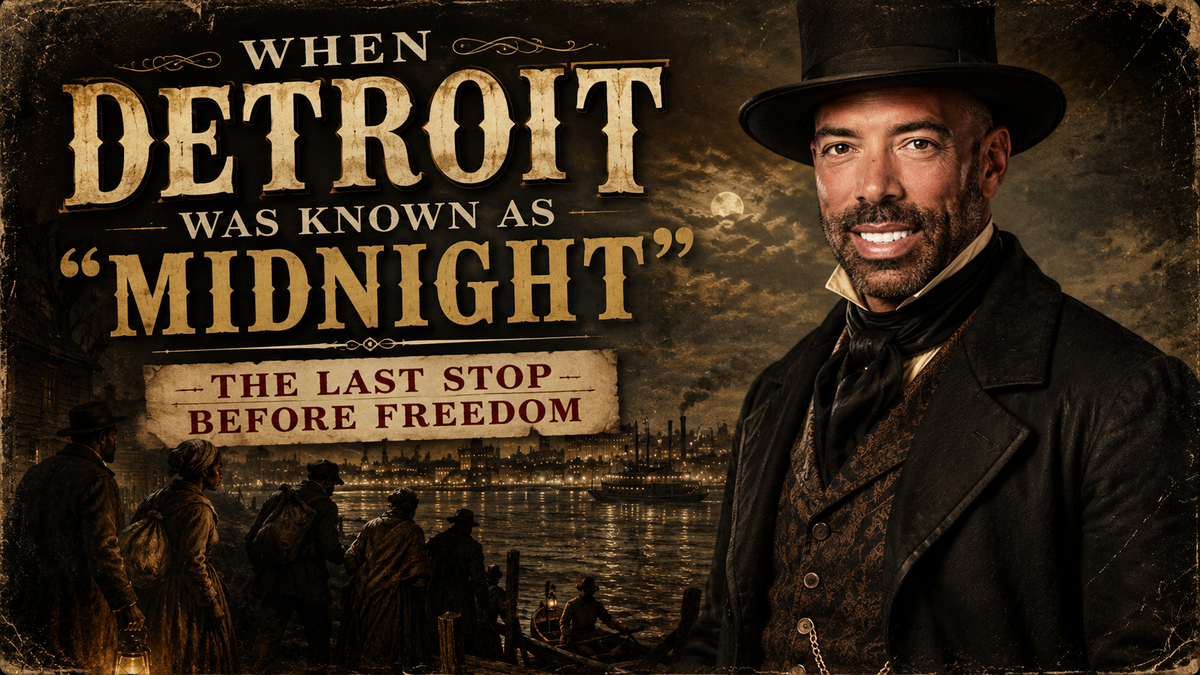
Picture the Detroit River on a dark night in the 1850s. Canada — and with it, freedom beyond the reach of U.S. slavery laws — glimmering just across the water. For thousands of people who had traveled hundreds of miles through darkness, cold, and constant danger, this was the moment they had risked everything to reach.
Detroit had a code name among those who traveled the Detroit Underground Railroad: *Midnight.* And it was chosen for a reason.
"Midnight": Detroit's Secret Name on the Underground Railroad
In the network of secret routes, safe houses, and coded language that made up the Underground Railroad, cities were sometimes given code names to protect both the travelers and the people helping them. Detroit's name — Midnight — carried weight. It evoked the darkness that sheltered movement, the hour when it was safest to cross, and perhaps the threshold between one world and another.
Detroit's geography made it one of the most strategically critical stops on the entire network. The Detroit River, less than a mile wide in some stretches, separated the United States from Canada — and after the Fugitive Slave Act of 1850, Canada represented something American soil could no longer guarantee: legal freedom. Once across that water, freedom seekers were beyond the jurisdiction of U.S. law. The lights of Windsor were visible from the Michigan shore. Freedom was *that* close.
The People Who Made It Possible
Getting to Detroit was only part of the journey. Arriving safely — and getting across the river — required an intricate web of local residents and allies who put their own lives and livelihoods on the line.
People were sheltered in homes, barns, churches, and shops throughout the city. These weren't faceless institutions. They were neighbors, business owners, and congregation members who looked at someone arriving exhausted and terrified at their door and made a choice to help. Under the Fugitive Slave Act, that choice carried serious legal consequences. Helping a freedom seeker could mean fines, imprisonment, or the destruction of a business. People helped anyway.
The courage embedded in that decision — ordinary people offering shelter at extraordinary personal risk — is woven into the identity of this city in a way that the auto industry, for all its importance, simply isn't.
What Remains: Detroit's Living Memory
The Detroit Historical Museum holds a permanent exhibit called *"Doorway to Freedom: Detroit and the Underground Railroad"* that documents this history in depth. It's one of the most powerful museum experiences in Metro Detroit, and if you haven't visited, it deserves a place on your list — whether you're a lifelong Detroiter or new to the region.
The exhibit draws a direct line between the geography of the Detroit River, the courage of local residents, and the thousands of freedom seekers who passed through this city on their way to a life they could finally call their own. Standing there, looking at the Detroit River on the map, it reframes every future view of that waterfront.
The sources behind this history — including the Detroit Historical Society's Encyclopedia of Detroit — make clear that this wasn't a footnote. Detroit was one of the most important final stops on the entire Underground Railroad. The word *important* doesn't capture it. For the people who crossed that river, it was everything.
Why This History Still Matters to Metro Detroit Residents Today
History like this has a way of reframing the present. When we think about what Detroit *is* — what it means to live here, to raise a family here, to be part of this region — the Underground Railroad is part of that answer.
This was a city where people in desperate need of shelter found it. Where strangers became protectors. Where the idea of *home* — not as a property, but as a place of safety and belonging — meant something profound enough that people risked everything to provide it.
For those of us who live here now, in Detroit and across Metro Detroit, that's a thread worth knowing. It connects the riverfront we walk along today to one of the most morally significant chapters in American history. It reminds us that this region has, at its core, a story about people moving toward something better — and other people choosing to help them get there.
That's worth knowing. That's worth remembering.
---
*To learn more and see the full exhibit, visit the Detroit Historical Museum's "Doorway to Freedom: Detroit and the Underground Railroad" at detroithistorical.org.*
---
Frequently Asked Questions
Why was Detroit called "Midnight" on the Underground Railroad?
Detroit was reportedly given the code name "Midnight" within the Underground Railroad network as a way to reference the city discreetly and protect those involved in aiding freedom seekers. The name likely reflected both the nighttime hours when movement was safest and the symbolic weight of the city as a final threshold before crossing into Canada.
Where can I learn more about the Detroit Underground Railroad today?
The Detroit Historical Museum hosts a permanent exhibit called "Doorway to Freedom: Detroit and the Underground Railroad," which documents the city's role in sheltering freedom seekers and helping them cross the Detroit River into Canada. The Detroit Historical Society also maintains an online Encyclopedia of Detroit with detailed research on the subject at detroithistorical.org.
Why was Detroit such an important stop on the Underground Railroad?
Detroit's location on the Detroit River made it uniquely significant — Canada was visible from the Michigan shore, and crossing the river meant reaching territory beyond the reach of U.S. slavery laws, including the Fugitive Slave Act of 1850. That narrow stretch of water represented the difference between capture and permanent freedom, which made Detroit one of the most strategically critical final stops in the entire network.
Homes for Sale in These Areas
Stay Updated
Get market insights, tips, and news from the MARK Z team.