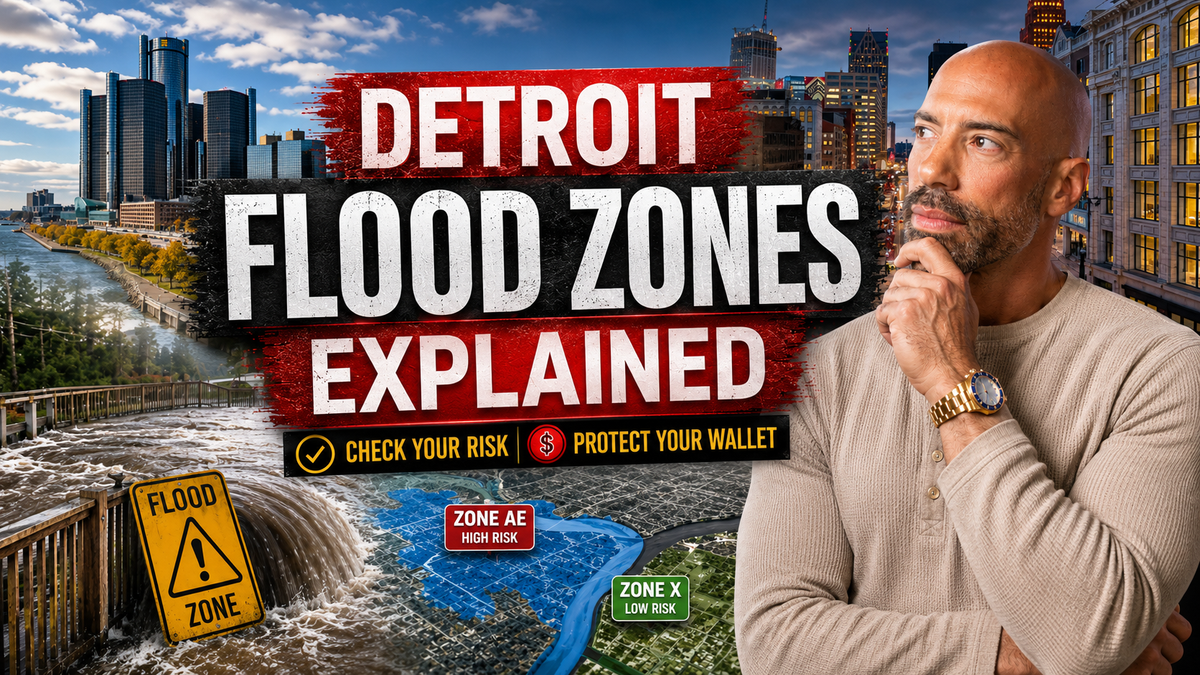
Detroit Flood Zones Explained: How to Check If Your Home Is at Risk and What It Costs You
Many Metro Detroit homeowners are in or near a FEMA flood zone without knowing it — and that gap in knowledge can cost thousands of dollars at the worst possible moment. Detroit flood zones explained simply: FEMA classifies land by flood risk, and your zone designation directly affects whether flood insurance is required, what it costs, and how easily your home sells or refinances.
How to Look Up Your Flood Zone in Detroit and Metro Detroit
FEMA maintains official Flood Insurance Rate Maps (FIRMs) for every county in Michigan, and you can search any address through FEMA's Flood Map Service Center at msc.fema.gov. For a faster check, use a flood zone lookup tool that pulls current FEMA data — enter your address and you'll see your zone designation, whether you're in a Special Flood Hazard Area (SFHA), and what insurance requirements apply.
In Novi and across Oakland and Wayne counties, flood zone boundaries aren't static. When upstream development changes how water moves through a watershed, or when communities upgrade stormwater infrastructure, FEMA can revise its maps. A property that was Zone X (minimal risk) five years ago may have been remapped into Zone AE (high risk, 1% annual flood chance). The opposite is also possible — and worth pursuing if your home was reclassified upward.
Wayne County has a documented history of repetitive-loss properties, meaning certain addresses have filed multiple flood insurance claims. If you're buying in Wayne County specifically, ask whether the property appears on FEMA's repetitive-loss list. It matters for both insurance costs and long-term resale. Find out what your home is worth →
What FEMA Flood Zone Designations Actually Mean for Your Wallet
Here's the practical breakdown:
• **Zone X (unshaded or shaded):** Lower risk. Flood insurance is not federally required, but shaded X zones still carry moderate risk — worth considering.
• **Zone AE or A:** High-risk SFHA. If you have a federally backed mortgage (FHA, VA, Fannie/Freddie), flood insurance is mandatory. Annual premiums under FEMA's Risk Rating 2.0 now reflect your property's specific risk rather than just its zone — costs can range from a few hundred to several thousand dollars per year.
• **Zone VE:** Coastal high-velocity zones. Not common inland, but relevant for some lakefront properties in Michigan.
For corporate relocations into Metro Detroit — auto industry, tech, or otherwise — this catches buyers off guard constantly. A home priced attractively in a flood zone may carry $2,000–$4,000 or more in annual insurance costs that weren't factored into the budget.
What Homeowners Should Do If Their Property Is In or Near a Flood Zone
• **Get an Elevation Certificate.** This document measures your structure's elevation relative to the base flood elevation. It can lower your NFIP premium significantly — and is essential if you plan to appeal your zone classification.
• **Look into a Letter of Map Amendment (LOMA).** If you believe your property was incorrectly mapped into a high-risk zone, a licensed surveyor can help you apply for a LOMA through FEMA. Approved LOMAs can eliminate the mandatory insurance requirement.
• **Don't assume your zone hasn't changed.** Check your current designation before you refinance or list. Lenders will order a flood determination, and surprises at that stage delay closings. Find out what your home is worth →
• **Shop private flood insurance.** Since FEMA's Risk Rating 2.0 launched, private carriers have become competitive — sometimes offering better coverage at lower premiums than the NFIP.
What This Means For You
• Flood zone status is now a first-order due diligence item, not an afterthought — check it before making an offer or listing your home
• Wayne County's repetitive-loss history means some properties carry risk that isn't obvious from a drive-by or a basic inspection
• Zone AE designation with a federally backed mortgage means mandatory flood insurance — budget accordingly before you're locked into a purchase
• A LOMA or updated Elevation Certificate can meaningfully reduce costs, but takes time — start early if you're considering either
Flood risk in Metro Detroit is a real financial variable, not just a weather concern. The good news is that the information is accessible, and knowing your zone before it matters puts you in a far stronger position than discovering it mid-transaction.
For more on due diligence when buying or owning in Metro Detroit, visit the Z Real Estate Experts blog.
Frequently Asked Questions
How do I find out if my Detroit-area home is in a FEMA flood zone?
Go to FEMA's Flood Map Service Center at msc.fema.gov and enter your property address to pull the current Flood Insurance Rate Map for your area. You can also use a third-party flood zone lookup tool that pulls live FEMA data and shows your designation, SFHA status, and insurance requirements in one step.
Is flood insurance required for homes in Metro Detroit flood zones?
If your home is in a high-risk SFHA zone (such as Zone AE or Zone A) and you carry a federally backed mortgage — FHA, VA, or conventional loans sold to Fannie Mae or Freddie Mac — flood insurance is legally required. Properties in lower-risk Zone X are not subject to the mandate, though coverage may still be worth carrying depending on your specific location and exposure.
Can I get my home removed from a Detroit flood zone designation?
Yes, in some cases. If your home's lowest floor is above the base flood elevation and the mapping data is inaccurate for your specific parcel, a licensed surveyor can prepare an Elevation Certificate and submit a Letter of Map Amendment (LOMA) to FEMA on your behalf. Approved LOMAs remove the mandatory insurance requirement and can save homeowners hundreds to thousands of dollars annually.
Homes for Sale in These Areas
Wayne County
Detroit
Oakland County
Novi
Stay Updated
Get market insights, tips, and news from the MARK Z team.